A kitchen island remodel in Florida is less about picking a pretty slab and more about getting the layout and proportion right. The island is the hardest-working surface in the room. You prep on it, eat at it, and gather around it when friends come over. Across Palm Beach County, RenoVision builds islands that fit how people actually live and cook. Get the size and flow correct, and the rest of the kitchen falls into place.
Why the island is the center of a Florida kitchen
The island does more jobs than any other surface in the kitchen. It holds your prep space, hides storage in deep drawers, feeds the family at breakfast, and gives guests a place to lean while you cook. In an open plan, it also draws a soft line between the kitchen and the living area without closing anything off.
That matters a lot here. Florida living runs indoor to outdoor, and a lot of entertaining happens on a Saturday afternoon with the sliders open and people drifting between the kitchen and the lanai. The island becomes the spot where snacks land, drinks get poured, and conversation happens while dinner comes together. When we plan an open concept kitchen remodel, the island is usually the first thing we position. Everything else, the range, the sink, the seating, gets arranged around it.
Island materials that hold up in Florida
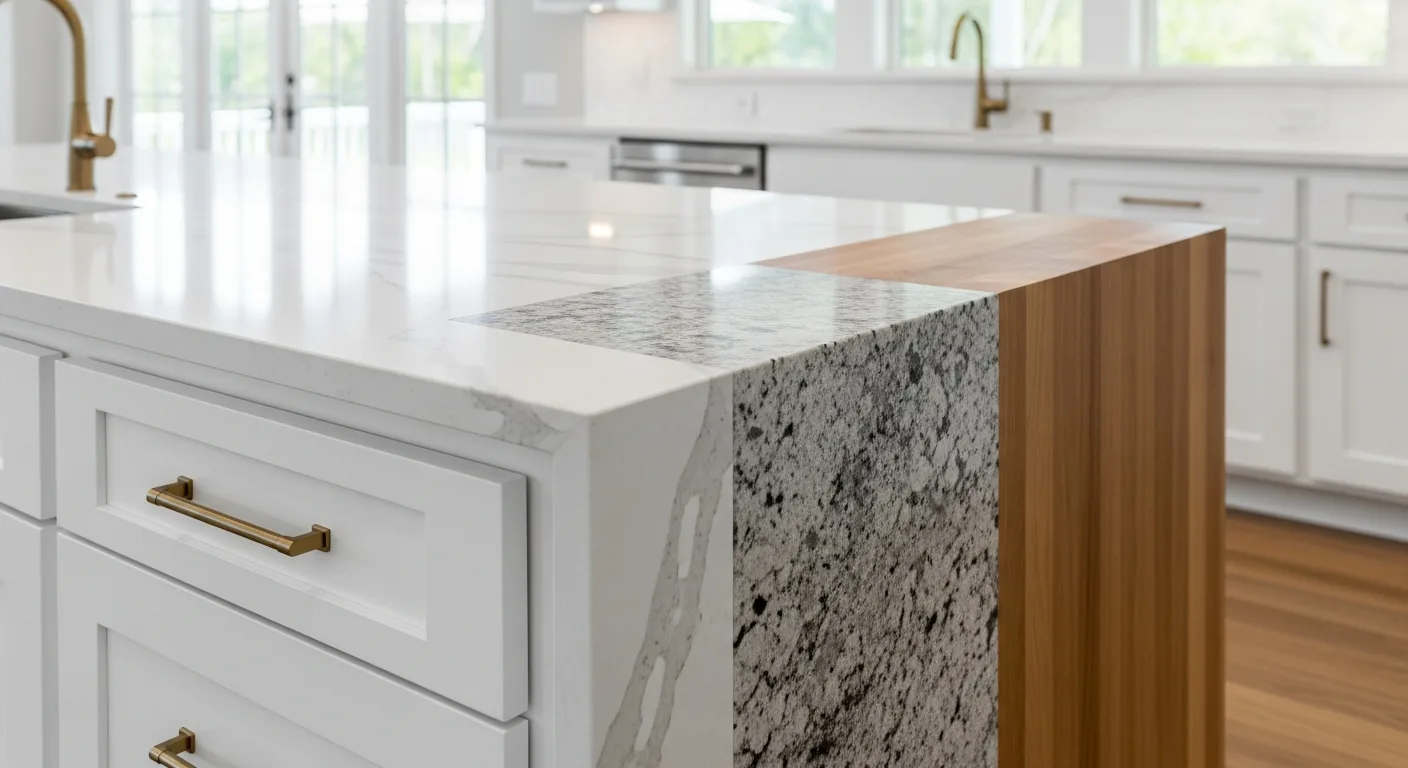
Material choice on an island is part looks, part durability, and in Florida that second part carries real weight. Our humidity is high most of the year, and the island top takes constant use: hot pans, spilled wine, kids doing homework, someone rolling dough. You want a surface that shrugs all of that off.
For most island tops, we lean toward quartz. It is engineered, non-porous, and does not need sealing, which is a quiet advantage in a humid climate where porous stone can stain or harbor moisture over time. Granite and quartzite both look fantastic and wear well, though they need periodic sealing. Butcher block has warmth that engineered stone cannot copy, so we often use it as an accent section rather than the whole top. Think about how you cook before you commit. When you want the full breakdown, see our guide to countertop materials for your island.
| Material | Look/feel | Florida durability | Best for |
|---|---|---|---|
| Quartz | Clean, consistent, modern | Non-porous, no sealing, handles humidity well | The main island top |
| Granite | Natural, unique veining | Tough, needs periodic sealing | Homeowners who want one-of-a-kind stone |
| Quartzite | Natural marble look, harder than it appears | Durable, needs sealing | A marble look with more resilience |
| Butcher block (accent) | Warm, organic | Needs oiling, not for wet zones | A prep zone or contrast section |
Waterfall edges and seating: the look everyone wants
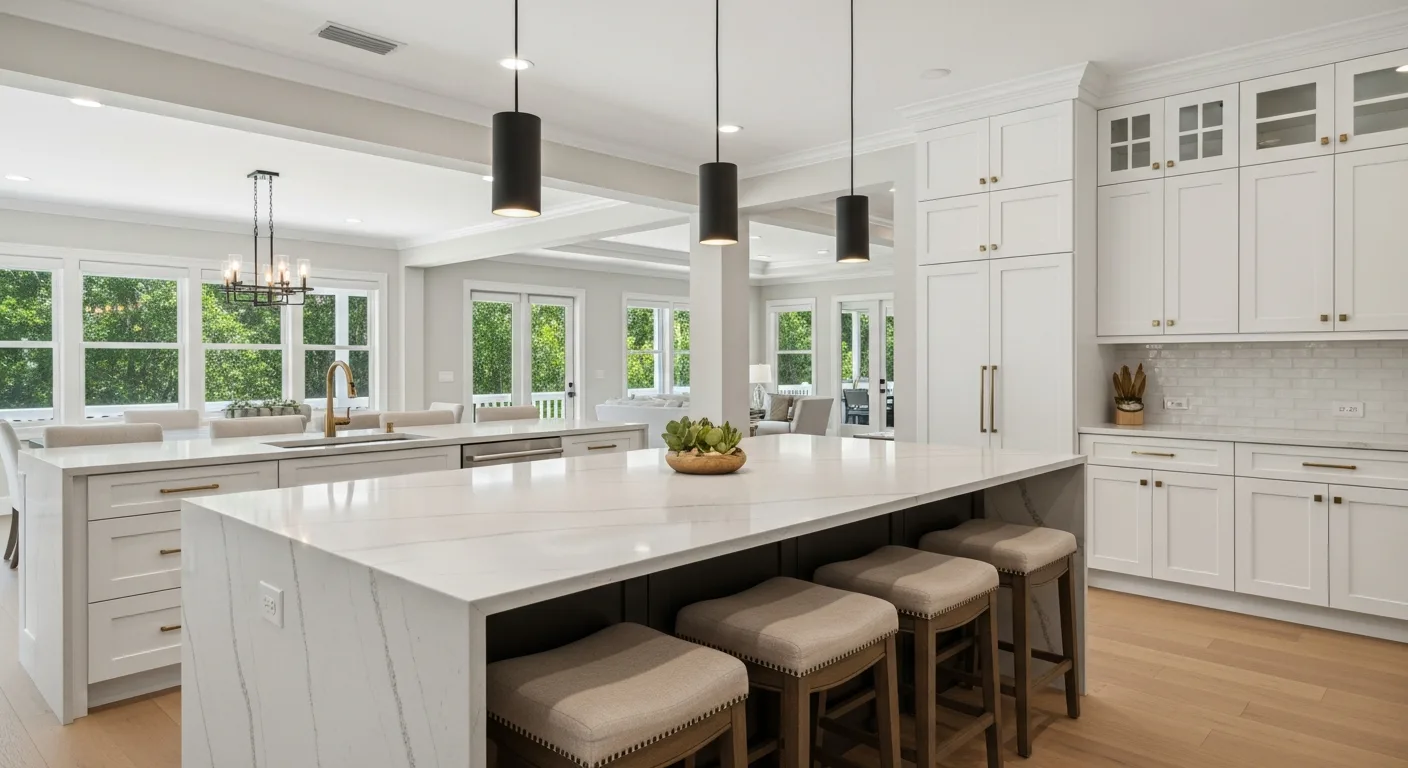
A waterfall edge is the detail people point to in photos. The countertop slab runs over the end of the island and continues straight down to the floor, so the stone appears to pour off the side. It looks clean and a little luxe, and it works best when the fabricator book-matches the slab, lining up the veining so the pattern wraps the corner without a visual break. Is it worth it? On a feature island in an open plan, where you see the sides from the living room, usually yes. On an island buried against cabinets, you will not see enough of it to justify the cost.
Seating is the other thing everyone wants. Plan at least 12 inches of overhang so knees fit comfortably under the counter. As a rough guide, allow about 24 inches of width per stool, so a 6-foot island seats three. Counter-height stools (around 24 inches) suit most family kitchens, while bar-height (around 30 inches) reads more social and works with a raised section.
Single island or two? Matching the island to your layout
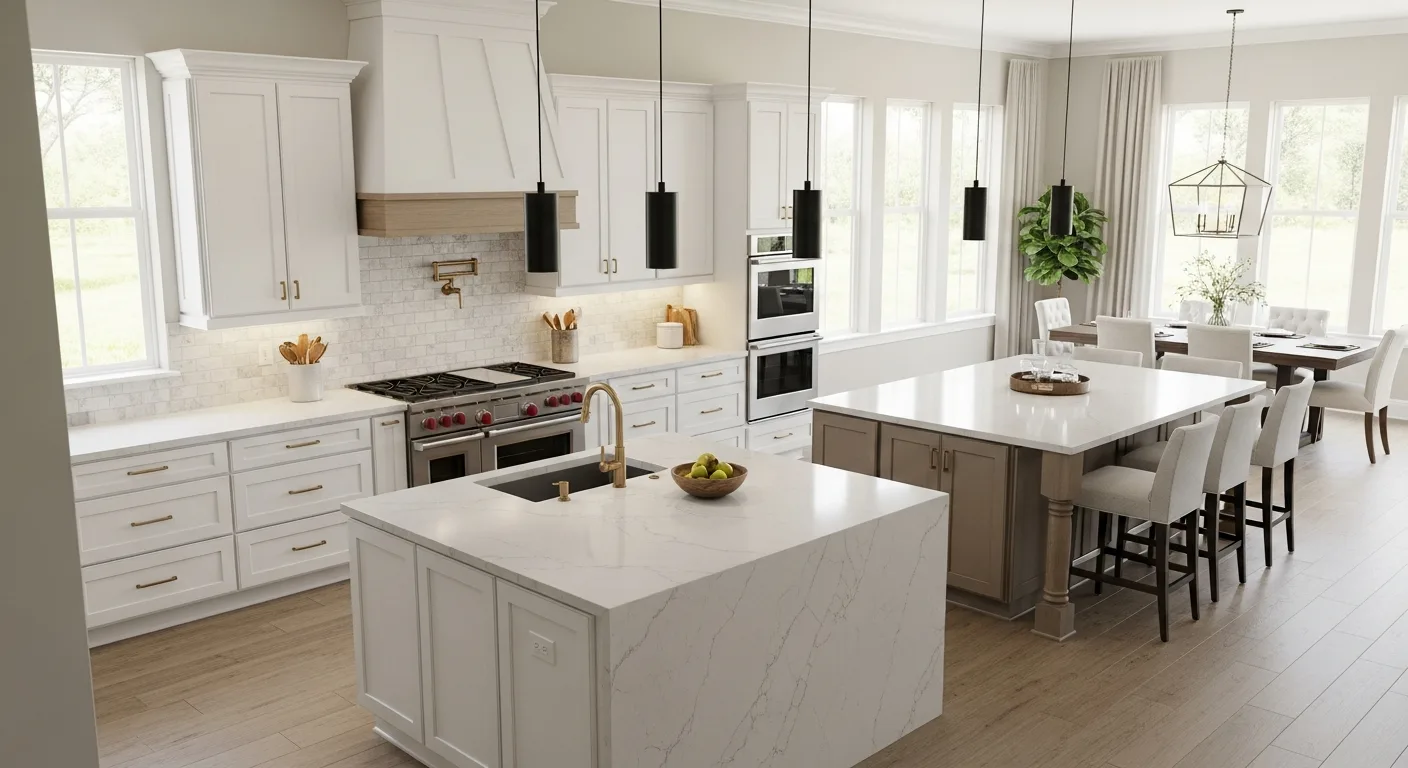
Not every kitchen wants the same island, and bigger is not automatically better. The right answer depends on your floor plan and how your family moves through the space. In a large open plan, a single oversized island can become a barrier that everyone has to walk around. Two smaller islands sometimes flow better, with one dedicated to prep and cleanup and the other left clear for seating and serving. In tighter footprints, a galley with one island or a peninsula can give you the same counter and storage without crowding the room. We work through this early, because the layout decision shapes everything downstream.
| Layout | How it works | Best for |
|---|---|---|
| Single large island | One central block for prep, storage, and seating | Open plans with room to circulate on all sides |
| Double island (prep + seating) | One work island, one social island | Large open-concept kitchens that entertain often |
| Galley + island | Two runs of cabinets with one island between | Long, narrow Florida kitchens |
| Peninsula instead of island | Counter attached on one end, open on three sides | Smaller kitchens that still want a seating edge |
Lighting the island right
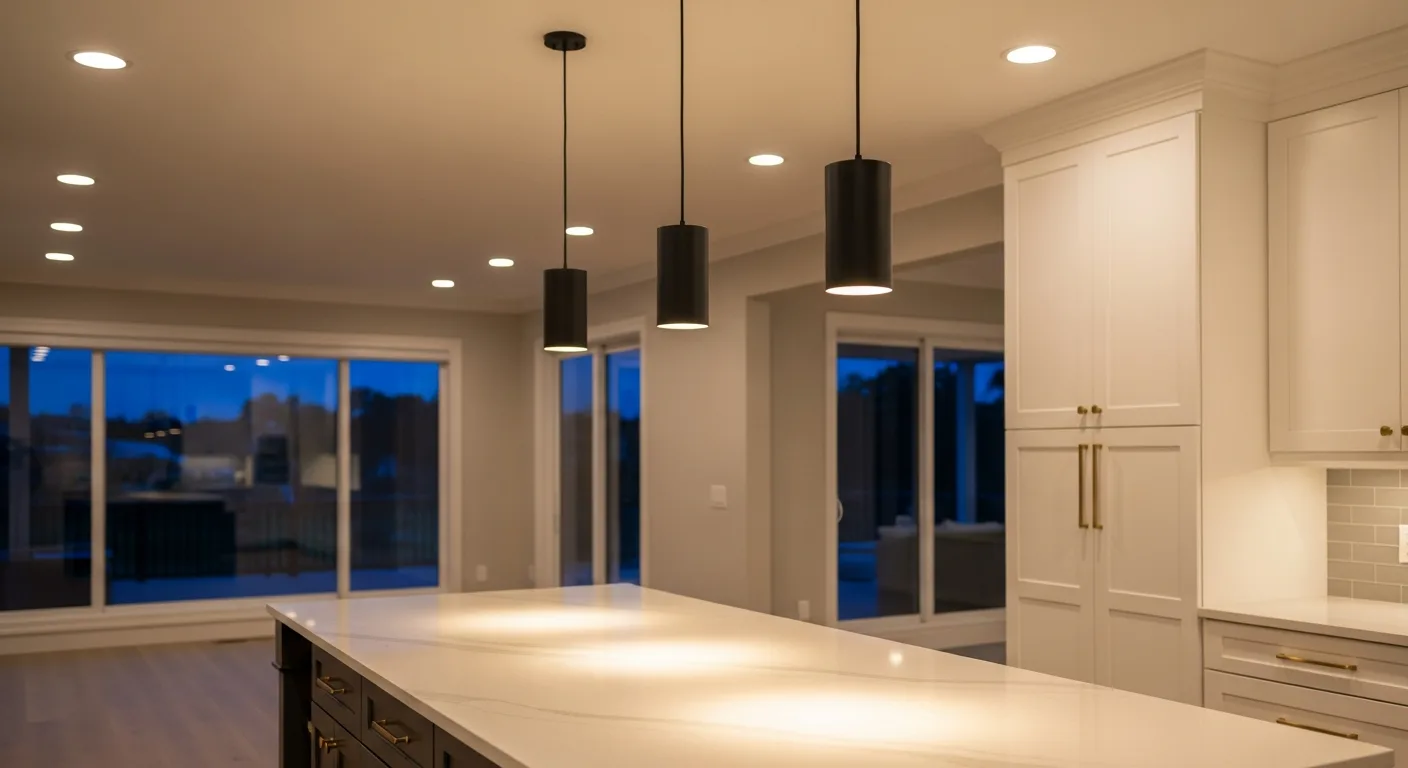
Lighting is where a good island becomes a great one, and pendants over the island are the move. Count and spacing follow the island length. Two pendants suit most islands up to about 6 feet, three pendants for islands in the 7-to-9-foot range, and you space them evenly with even gaps at each end so the run looks balanced. Hang them 30 to 36 inches above the countertop. Any lower and they block sightlines across an open plan; any higher and they stop doing their job.
Color temperature matters too. Stick with warm light in the 2700K to 3000K range so the kitchen feels inviting rather than clinical. Pendants alone are not enough, though. Layer them with recessed cans for general coverage, and put both on dimmers. In a Florida open plan, where the kitchen flows into the living space, dimmable layers let you shift from bright prep mode to a softer glow when guests arrive.
Storage and function built into the island
The best islands earn their footprint with what is built inside them. Deep drawers beat low cabinets for pots and pans, because you pull the whole stack out instead of crouching and reaching into a dark box. A pull-out for trash and recycling keeps bins off the floor and out of sight. A microwave drawer tucks the appliance below the counter and frees up wall space. If your cook flow supports it, a prep sink on the island lets two people work without bumping elbows.
Do not forget power. Code requires receptacles on most islands, and we place them where you actually use small appliances, not as an afterthought. On the seating side, a shallow bookcase or open shelving at the end gives kids a spot for cookbooks or homework. Function first, flash second.
Sizing and the work triangle
Good islands start with dimensions and clearances, not looks. A workable island is usually at least 4 feet long and around 3 feet deep, but the bigger number to watch is the aisle around it. Leave 42 to 48 inches of clearance between the island and the surrounding counters so two people can pass and dishwasher and oven doors open fully. Squeeze that aisle and the kitchen feels cramped no matter how nice the finishes are.
The island should also respect the work triangle, the path between your sink, range, and refrigerator. Placed well, the island shortens that path and gives you landing space between stations. Placed poorly, it blocks the path and you spend the day walking around it. The National Kitchen and Bath Association publishes the industry clearance guidelines we design to, and we treat those numbers as the floor, not the ceiling.
How RenoVision approaches your kitchen island remodel
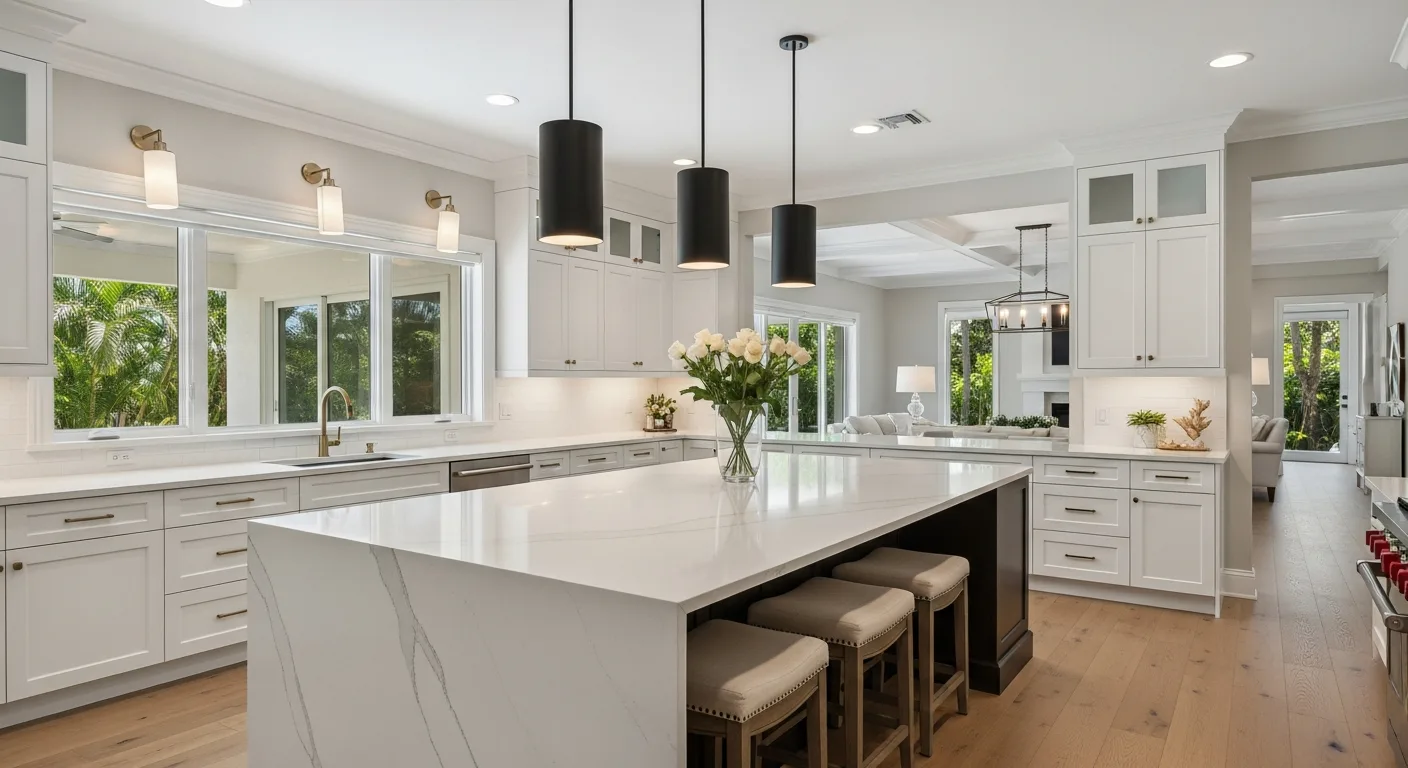
We start with layout and clearances before we talk finishes, because a beautiful island in the wrong spot still makes the kitchen worse. From there, we bring samples into your home and look at them in your light, since the same quartz reads differently under Florida sun than under showroom bulbs. We steer toward materials built for our climate, then build with our own crews rather than subcontracting the work out. Every project is permitted and handled here in Palm Beach County. Honestly, we would rather right-size an island than oversize it, and we will tell you when a smaller island serves you better. When you are ready to talk scope and your kitchen remodel budget, we will walk you through it plainly.
FAQ
How big should a kitchen island be? Most islands work well at 4 feet or longer and about 3 feet deep, but the aisle around it matters more than the island itself. Leave 42 to 48 inches of clearance on the working sides. If your floor plan cannot hold those clearances, a smaller island or a peninsula usually serves you better.
Is a waterfall edge worth it? On a feature island you see from the living room, yes, the waterfall edge adds a clean, finished look that reads as high quality. On an island tucked against cabinets where the sides barely show, the extra slab cost is hard to justify. Book-matching the veining is what makes it look intentional.
How many stools fit at an island? Allow roughly 24 inches of width per stool. A 6-foot island seats about three comfortably, and a 7-to-8-foot island can take four. Make sure you have at least 12 inches of overhang so knees clear the cabinet.
Quartz or granite for a kitchen island in Florida? For most island tops we lean quartz, because it is non-porous, needs no sealing, and handles Florida humidity without fuss. Granite is a great choice if you want natural, one-of-a-kind veining and do not mind periodic sealing. Both are durable; the decision usually comes down to whether you prefer a consistent look or a natural one.
Can I add an island to my existing kitchen? Often yes, as long as the room can hold the island plus 42 to 48 inches of aisle on the working sides. Adding power or a prep sink means running electrical or plumbing under the floor, which is doable in many homes. We measure the space first and tell you straight whether an island fits or whether a peninsula makes more sense.
Build a kitchen island that works as hard as you do
RenoVision serves Palm Beach County with full kitchen and bathroom remodels, designed and built by our own crews. If you are planning a kitchen island remodel, we will help you size it right, pick materials that last in our climate, and get the layout working before a single cabinet goes in. Start with a free consultation and let us look at your space.