Florida homeowners get one real window to build a kitchen that survives a major storm — when they’re remodeling. Once the walls close, the cabinets are set, and the appliances are wired in, changing the storm-resistant details becomes expensive and disruptive. The decisions that matter most are made before the first wall comes down.
Hurricane-ready kitchen design in Florida isn’t about buying the most expensive materials across the board. It’s about making specific choices at each phase of the remodel that reduce damage, protect your structure, and keep your home functional after the storm passes. This guide walks through each of those choices — with real specs, real costs, and the questions that separate contractors who build for Florida from those who just build.
Why Florida Kitchens Take More Storm Damage Than You’d Expect
Most people assume hurricane damage comes through roof failure or flooding from outside. In the kitchen specifically, the pattern is different — and more preventable.
| Damage Type | Root Cause | Frequency in FL Kitchens |
|---|---|---|
| Cabinet separation from wall | Insufficient fasteners — screws into drywall, not studs | Very common, especially pre-2000 homes |
| Window failure + water intrusion | Non-impact glass at sink or exterior walls | Common in Cat 2+ events |
| Countertop cracking | Structural flex in slab foundation homes | Less common, costly when it happens |
| Appliance damage from surge | No surge protection, no generator transfer switch | Extremely common |
| Ventilation path water intrusion | Standard vent covers blow open in high wind | Common, often undetected for days |
| Subfloor moisture damage | Sustained water from failed entry points | Common in low-lying coastal areas |
| Drawer slide and hinge corrosion | Non-stainless hardware in salt-air environments | Common within 1 mile of coast |
Every item in that table is addressable during a remodel at a fraction of post-storm repair cost. The Florida Building Code sets the floor for wind-load resistance and impact glazing. Homes in Palm Beach County, Broward, and Miami-Dade fall under the High Velocity Hurricane Zone (HVHZ) rules — stricter than the rest of the state, and enforced during inspections.
Meeting code is the minimum. Building smart means going a few steps further, specifically on the items above.
Cabinet Construction: What Actually Stays on the Wall
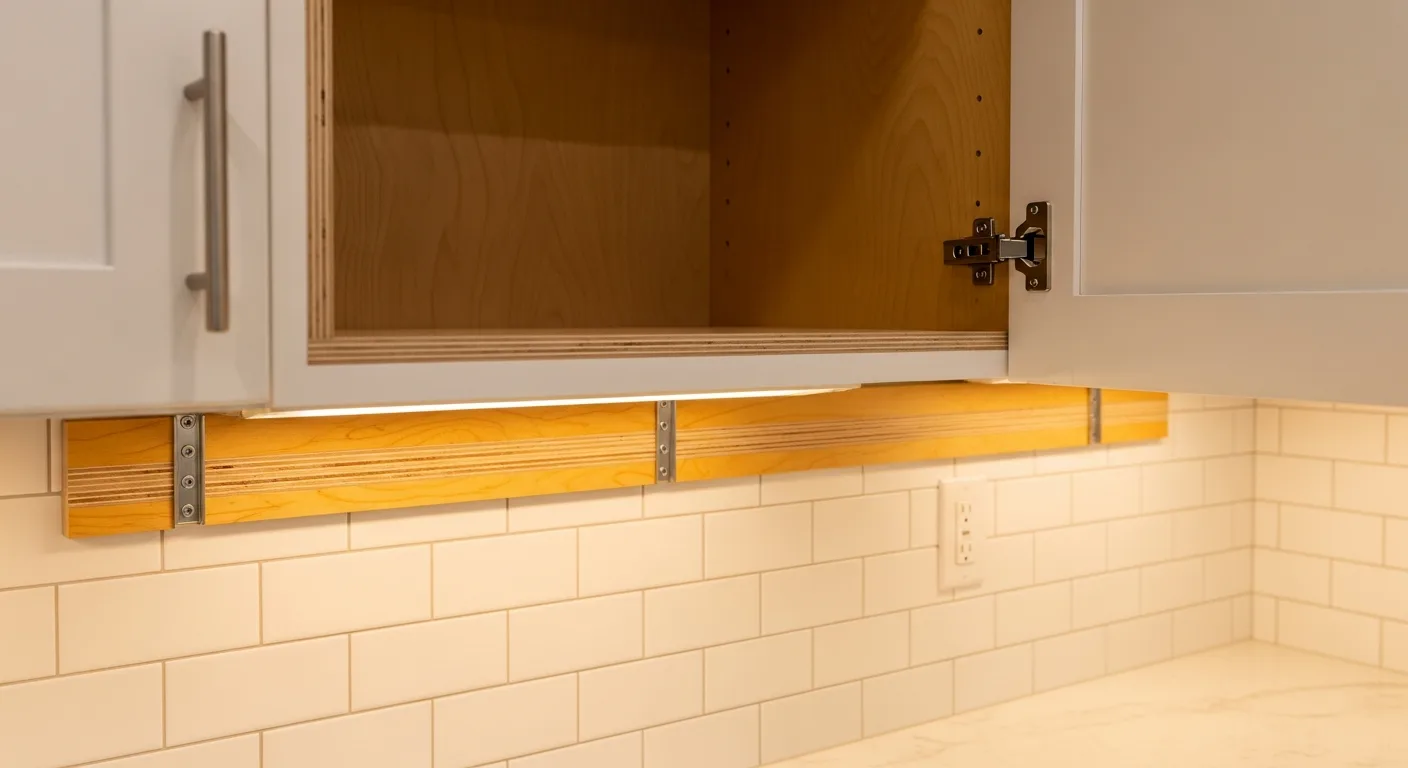
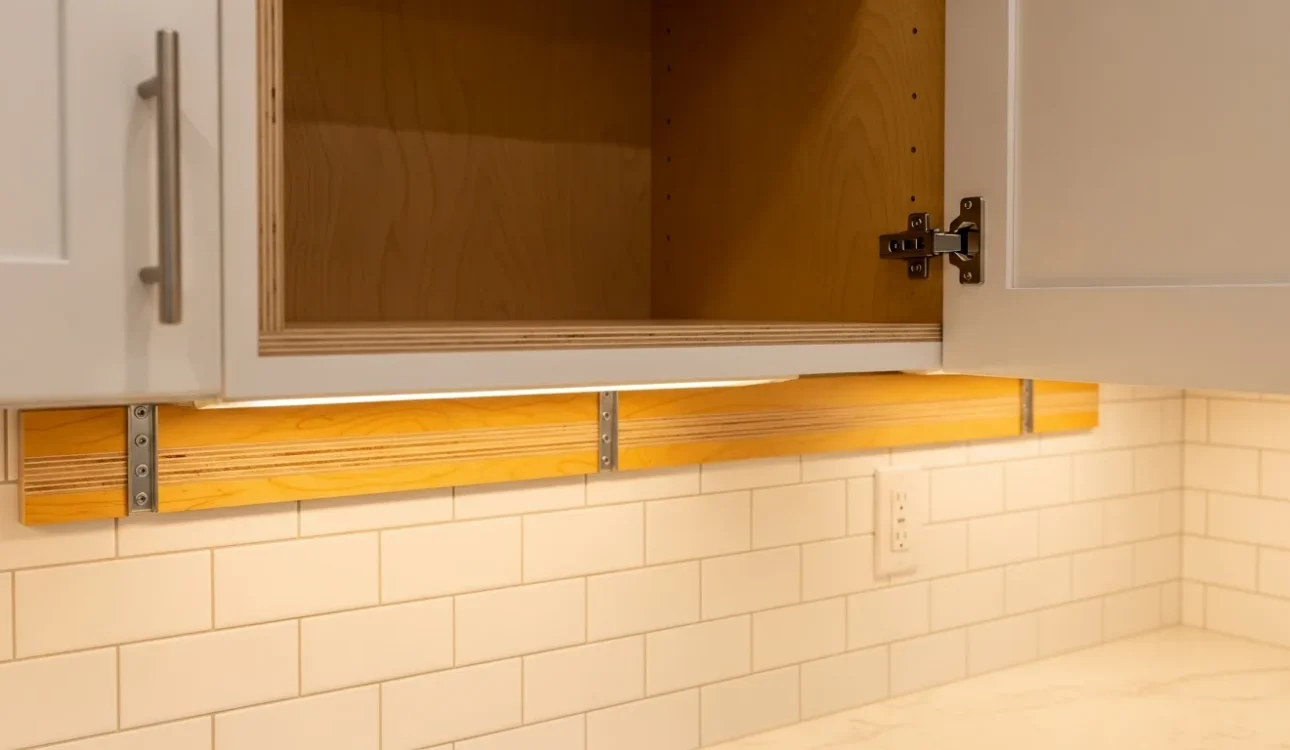
Most cabinets fail during hurricanes not because the cabinets themselves break — because of how they were attached. Standard installation uses 1-5/8″ screws into drywall with maybe one stud. Under 130 mph wind load and structural flex, that’s not enough.
| Cabinet Spec | Standard Install | Storm-Ready Install |
|---|---|---|
| Wall fasteners | 1-5/8″ drywall screws, 1 stud per cabinet | 3″ structural screws, min. 2 studs per cabinet |
| Mounting rail | Optional or omitted | Continuous ¾” plywood ledger, full cabinet run width |
| Cabinet box material | Particleboard | Plywood box, moisture-resistant glue |
| Corner blocking | Not standard | Steel L-brackets at upper corners into studs |
| Base cabinet anchoring | Light-duty floor clips | Heavy-duty floor anchors, toe-kick screwed to subfloor |
| Hardware | Standard zinc-coated steel | 304 stainless hinges + slides (coastal homes) |
| Interior finish | Bare particleboard | Sealed interior surfaces, all 6 sides |
The plywood mounting rail is the single most impactful upgrade. A continuous ¾” plywood ledger runs the full width of the upper cabinet run, fastened into every wall stud. Upper cabinets then attach to this ledger with 3″ structural screws — load spreads across the entire wall instead of concentrating at individual cabinet points. Cost to add: $400–$800 for a typical kitchen. Cost to repair failed cabinets after a storm: $8,000–$25,000.
Particleboard vs. plywood boxes. Particleboard swells and delamines after even brief moisture exposure. In a home where a window fails or a roof leaks for 48 hours, particleboard cabinets often require full replacement. Plywood boxes add $800–$2,500 to a mid-range project and protect a $20,000–$40,000 cabinet investment. For context on how these costs fit into a full project, see kitchen remodel cost in Florida.
Hardware for coastal homes. Within a mile of salt air, standard zinc-coated drawer slides and hinges show visible corrosion within two to three seasons. Blum or Grass soft-close hardware in 304-series stainless costs roughly $60–$120 more per cabinet run and lasts 15–20 years in the same environment. Not optional for homes in Palm Beach, Boca Raton, or any barrier island.
Countertops: Storm Damage Nobody Talks About
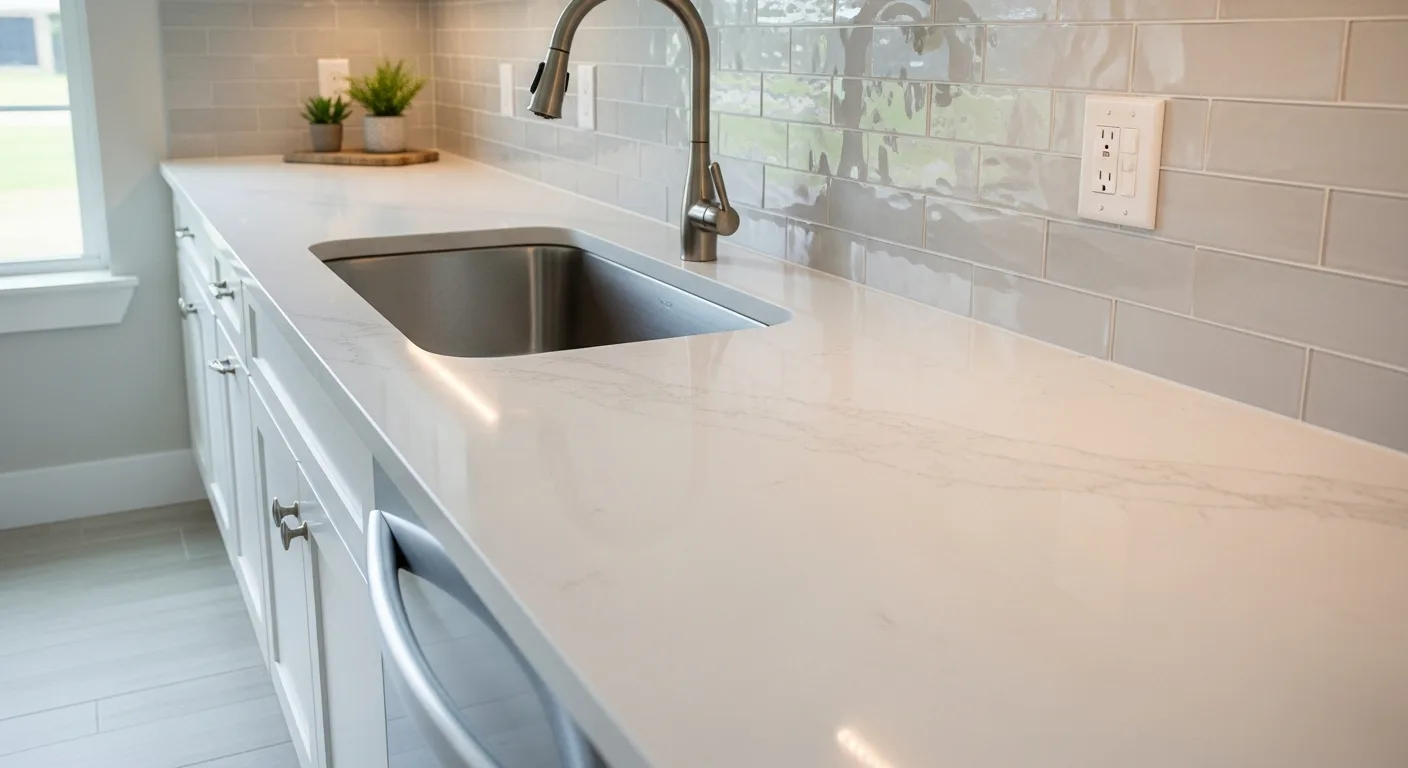
Countertops rarely get discussed in hurricane prep guides. They should. Water that enters through a failed window or roof can sit under a countertop overhang for days before anyone notices — and the material determines whether that’s a surface wipe-down or a full demo.
| Countertop Material | Water Resistance | Post-Storm Repairability | Installed Cost FL (per sq ft) |
|---|---|---|---|
| Quartz (engineered) | Excellent — fully non-porous | Easy — no sealing needed, consistent slab | $65–$130 |
| Granite | Good if sealed annually | Medium — porous if not maintained | $60–$120 |
| Quartzite | Good if sealed | Medium | $85–$175 |
| Marble | Poor — highly porous, stains easily | Difficult — staining after moisture is common | $95–$200+ |
| Laminate | Poor — swells and delaminates | Replace entirely | $15–$40 |
| Ceramic tile | Moderate — grout lines trap moisture | Grout replacement needed | $25–$55 |
| Porcelain slab (large format) | Excellent — non-porous, minimal grout | Good — minimal joints | $80–$150 |
Quartz is the practical choice for Florida storm exposure. Non-porous surface means standing water doesn’t penetrate. No annual sealing requirement removes a maintenance step most homeowners skip after the first year. Consistent thickness makes it predictable under the structural flex that happens when a home moves under high wind load.
Undermount vs. drop-in sinks. Drop-in sinks with a rim sitting on the counter surface create a continuous moisture trap at the seam — after a storm event, that seam is exactly where mold starts. Undermount sinks eliminate the surface seam entirely. If you’re mid-remodel, the choice between undermount and drop-in adds zero cost — the countertop is already being fabricated.
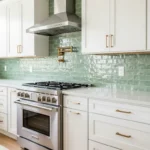
Backsplash tile grout sealing. Unsealed grout between backsplash tiles absorbs moisture after any water intrusion event. Apply a penetrating grout sealer at installation and reseal every two years. Large-format tiles with minimal grout lines are both the current design trend in Florida kitchens and the more practical storm-season choice.
Appliances and Utilities: Plan Before the Walls Close
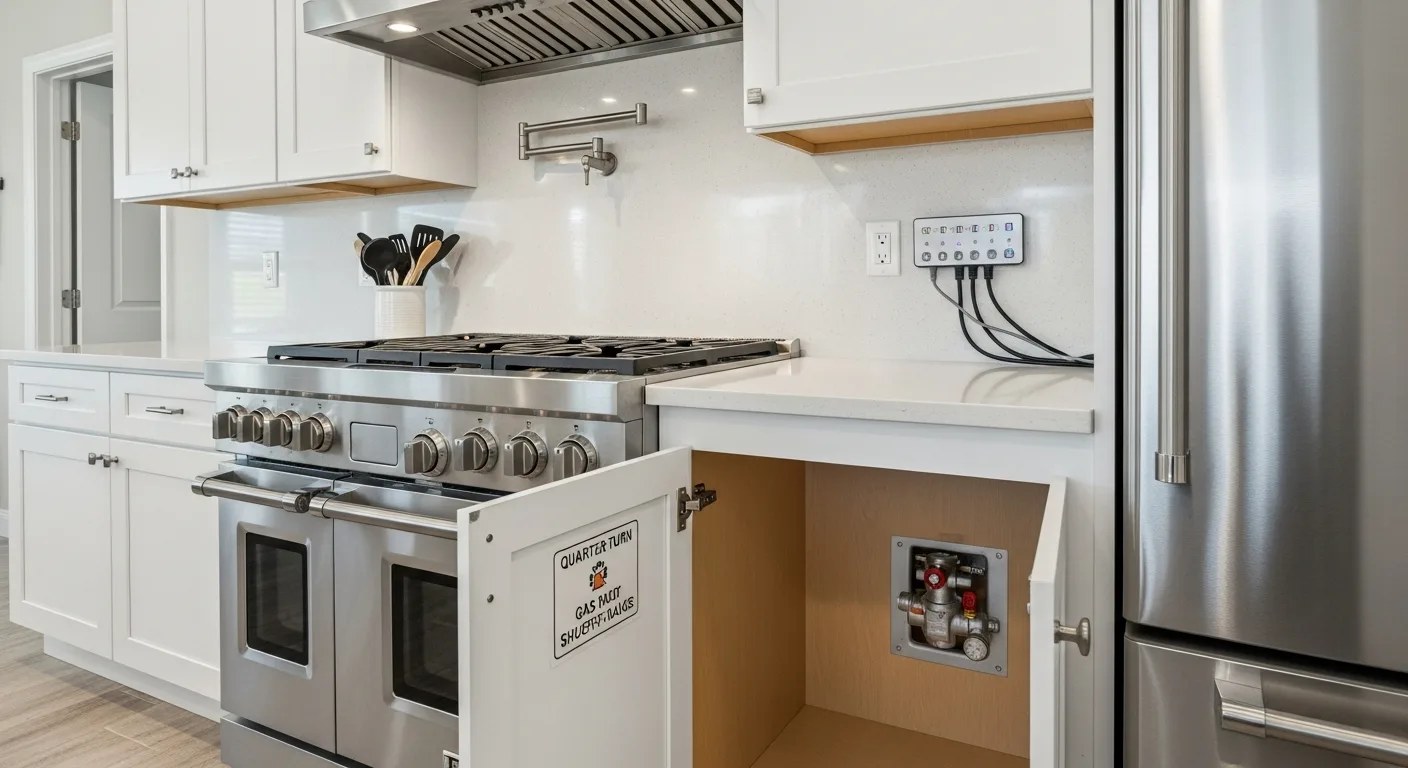
Appliance planning for storm readiness happens during the remodel. Once drywall is up and cabinets are in, every one of these items costs 3–5x more to add or modify.
| Item | Standard Setup | Storm-Ready Setup | Added Cost (during remodel) |
|---|---|---|---|
| Refrigerator circuit | Standard 20A outlet | Dedicated 20A + surge protector + generator-transfer-ready | $400–$900 |
| Gas shutoff valve | Builder location, often behind range | Quarter-turn ball valve, labeled, accessible without moving appliances | $150–$400 |
| Water supply shutoff | Under-sink valves only | Whole-kitchen shutoff at wall, accessible from a base cabinet panel | $80–$200 |
| Dishwasher drain | Standard P-trap | Backflow preventer on drain line | $60–$120 |
| Range hood vent cover | Standard exterior flap (blows open) | Storm-rated weighted damper cover | $100–$250 |
| Cooktop type | Electric only | Gas or dual-fuel (manual-light capable during power outage) | $200–$600 premium |
| Electrical panel feed | Standard circuit | Manual transfer switch for portable generator | $800–$2,500 |
Gas shutoff placement. Most Florida homes have the gas shutoff either behind the range or in the utility room — inaccessible when you need it fast. During a remodel, repositioning a quarter-turn ball valve to a labeled access panel inside a base cabinet costs $150–$400 and takes a plumber about two hours. In an emergency, you’ll be glad it’s there.
The transfer switch is the minimum for backup power planning. Even if you’re not installing a generator now, running conduit to the panel during the remodel rough-in costs $300–$600. Retrofitting that same conduit through finished walls and cabinets after the fact runs $1,500–$3,000. Pre-wire now. Install the generator later.
Cooktop redundancy. A dual-fuel range (gas top, electric oven) can be manually lit on the burners during a power outage using a match or lighter. The oven won’t work without power, but you can cook. An all-electric cooktop goes completely dark in an outage unless you’re on generator or battery backup.
Impact Windows in the Kitchen: Specs That Matter

The kitchen window above the sink is often the largest window opening in the house and one of the most common entry points for storm water. Impact window specs matter — and “impact glass” alone isn’t enough to know what you’re getting.
| Window Type | Wind Resistance | FL Code Compliance | Cost Installed (per window) |
|---|---|---|---|
| Standard double-pane, no impact | Minimal — shatters at Cat 1 speeds | Not compliant for new installs | $400–$800 |
| Basic impact glass (non-laminated) | Moderate — may crack but hold | Compliant in many counties | $700–$1,200 |
| Impact laminated glass | High — glass holds together when broken | Compliant statewide | $900–$1,600 |
| HVHZ-rated laminated glass | Highest — Miami-Dade NOA certification | Required in Miami-Dade, Broward, coastal Palm Beach | $1,100–$1,900 |
| Impact laminated + exterior storm shutter | Maximum — two physical barriers | Compliant + exceeds minimum | $1,400–$2,400 |
| Impact laminated + impact-rated casing | High — frame integrity matters too | HVHZ-rated frame + glass combos | $1,200–$2,000 |
| Aluminum-clad wood frame with impact glass | High + thermal performance | Compliant, common in Palm Beach luxury | $1,500–$2,800 |
HVHZ vs. standard impact ratings. If your home is in Miami-Dade, Broward, or coastal Palm Beach County, windows must carry a Miami-Dade NOA (Notice of Acceptance) or Florida Product Approval number — not just a generic “impact rated” label. Ask your contractor to pull the exact product approval number for any window they’re specifying. This matters at inspection and it matters when you file an insurance claim after a storm.
Range hood and microwave exhaust penetrations. Every vent that passes through an exterior wall is a potential water entry point in high wind. Standard vent covers open freely in both directions — wind pushes them open during a storm. Storm-rated vent covers use weighted or spring-loaded dampers that stay closed under wind pressure. They cost $40–$120 per vent cover and take 20 minutes to install when the wall is already open during a remodel.
Skylights above the kitchen. If your Florida kitchen has a skylight and it isn’t HVHZ-rated, a remodel is the right time to address it. Skylights are among the most common water intrusion points after Cat 2+ events. Replace with an HVHZ-rated impact skylight or close the opening during construction.
Generator and Backup Power: What Actually Works
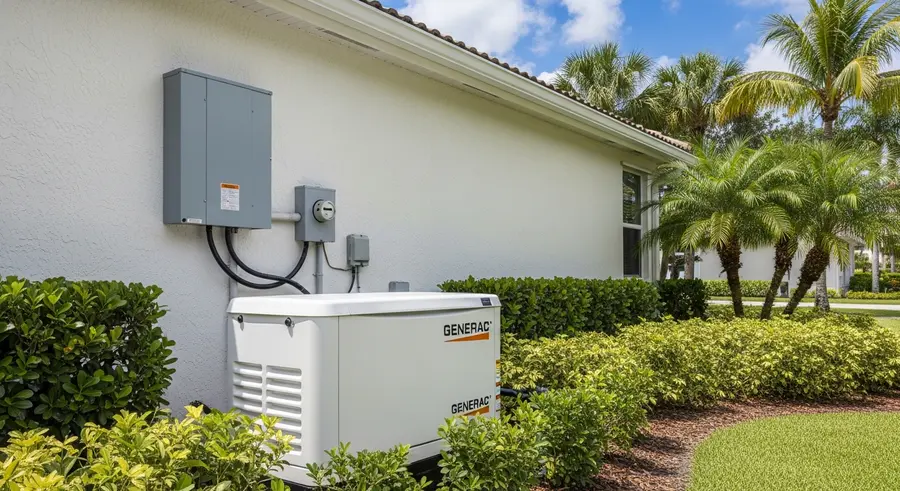
After a major hurricane in Florida, power outages average 4–10 days for a Cat 2 event and 2–4 weeks after Cat 4+. Your kitchen becomes the entire household’s operational center. Planning for backup power during a remodel is 3–5x cheaper than retrofitting it afterward.
| Backup Power Option | What It Runs in the Kitchen | Upfront Cost (installed) | Ongoing Cost |
|---|---|---|---|
| Manual transfer switch only | Ready for portable generator — nothing runs yet | $800–$2,500 | None until generator added |
| Portable generator 5,500W | Refrigerator, lights, small appliances, phone charging | $700–$1,200 (unit) + transfer switch | Fuel during use |
| Portable generator 10,000W | Above + window AC or microwave | $1,200–$2,200 (unit) + transfer switch | Fuel during use |
| Whole-home standby 10kW (natural gas) | Most of home except central AC | $5,000–$12,000 | Gas when running |
| Whole-home standby 22kW (natural gas) | Full home including central AC | $9,000–$20,000 | Gas when running |
| Tesla Powerwall 3 (battery) | Critical circuits 12–24 hrs | $12,000–$18,000 | Minimal |
| Battery storage + solar panels | Critical circuits indefinitely (sunny days) | $22,000–$40,000 | Minimal |
Natural gas standby is the preference in Palm Beach County. Unlike propane tanks that run dry and can’t be refilled when storm supply chains are disrupted, natural gas supply stays active in most Florida communities even after major storms. A 22kW Generac or Kohler unit with automatic transfer switch handles the full kitchen including central AC — the most common request in Palm Beach kitchen projects at the premium tier.
Portable generator sizing for the kitchen. Size to the refrigerator’s startup amperage draw — not running draw. Most residential refrigerators pull 1,500–2,500W on startup (2–3x running draw) for about 1–2 seconds each time the compressor kicks on. A 5,500W generator handles this without issue. Factor in any other loads you want simultaneously: a window AC unit adds 1,200–2,000W startup.
Battery storage without solar. A Tesla Powerwall 3 or Enphase IQ Battery provides 13.5kWh of storage — enough to run a refrigerator, lights, and phone charging for 12–18 hours without grid power. Without solar, it recharges from the grid when power returns. With solar, it recharges continuously. Useful for short outages; not a replacement for a generator in a multi-week event.
What to Ask Your Contractor Before You Sign
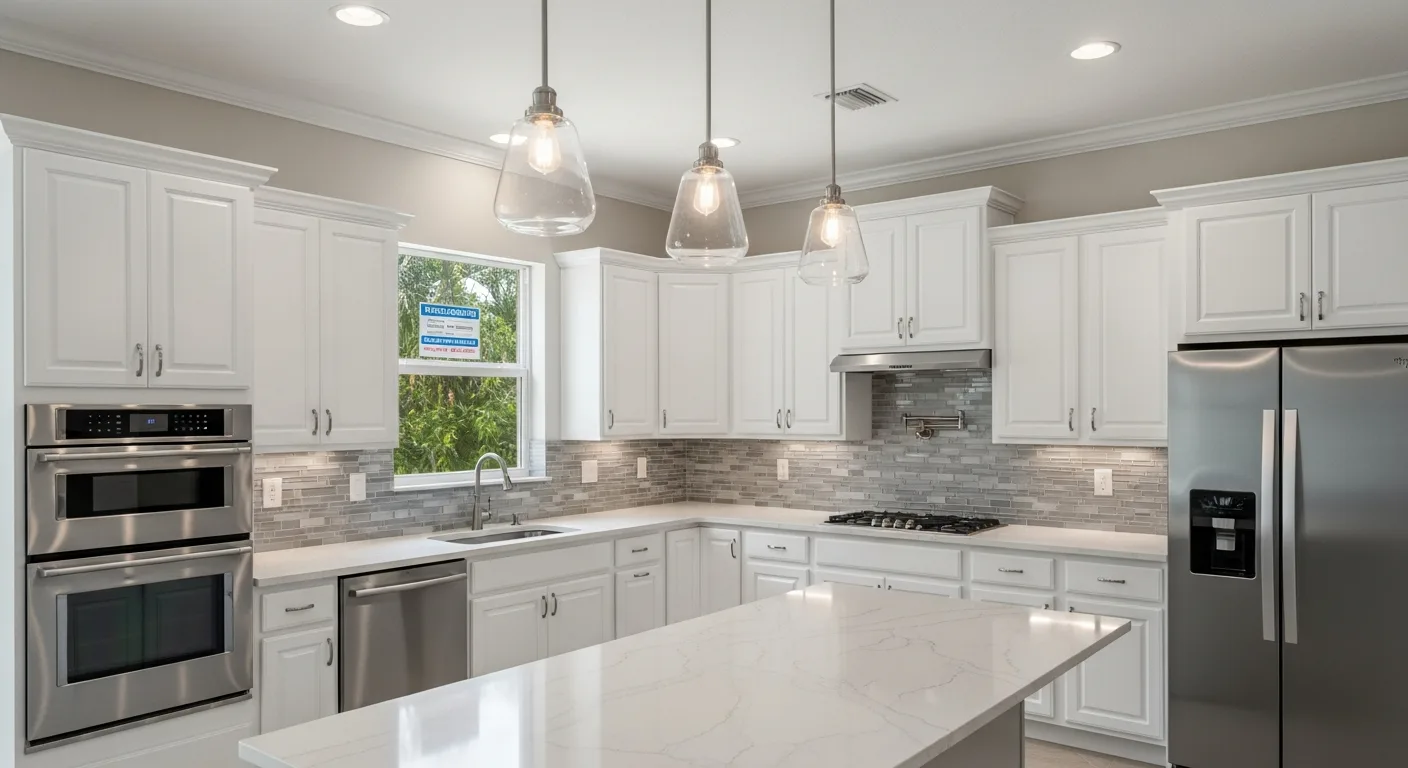
Most Florida contractors meet code minimums. The ones who build storm-ready kitchens think one layer past the minimums. These questions surface the difference before you’re locked into a contract.
| Question | Strong Answer | Weak Answer |
|---|---|---|
| “How do you attach upper cabinets?” | Plywood mounting rail + structural screws + stud count per cabinet | “Standard installation” or “per code” |
| “What cabinet box material?” | Plywood — explains why vs. particleboard | “Whatever you want” without discussing performance |
| “Are your window specs HVHZ-rated?” | Product approval number, not just “impact glass” | “They’re impact windows” with no specifics |
| “Do you install storm-rated vent covers?” | Names a brand or spec with weighted damper | “Standard vent covers” |
| “Can you pre-wire conduit for a generator?” | Yes, coordinates with electrician during rough-in | “We can add that later” |
| “What gas shutoff access do you provide?” | Labels location, explains reach without moving appliances | No mention of shutoff planning |
| “Do permits cover the window and electrical scope?” | Names the permit type, confirms scope coverage | “We’ll handle it” without specifics |
Permit verification is non-negotiable. Any scope touching electrical, plumbing, windows, or structure requires a permit in Florida. Unpermitted work voids homeowner’s insurance claims after storm damage — which is precisely the event you’re building against. If a contractor suggests skipping permits to save time or money, that contractor is not the right fit for a storm-ready remodel.
Ask for product approval numbers. Any impact-rated window or door product installed in Florida must have a Florida Product Approval or Miami-Dade NOA number. A contractor who can’t provide this on request is either installing non-compliant products or doesn’t know what they’re installing.
For the full picture of how a remodel runs from permit application through punch list, the week-by-week remodel timeline covers every phase — including where these storm-ready decisions get made and when they can no longer be changed.
FAQ
What makes a kitchen hurricane-ready in Florida? Five decisions matter most: impact-rated windows (HVHZ-certified if applicable), properly anchored cabinets with a plywood mounting rail and structural fasteners, storm-rated vent covers on all exterior penetrations, backup power planning (at minimum a manual transfer switch pre-wired during the rough-in), and non-porous countertop materials. Nearly all of these decisions happen during the remodel and cannot be economically retrofitted afterward.
Do I need impact windows specifically in the kitchen? Yes. The kitchen window — typically above the sink and often the largest in the home — is a primary water entry point in a storm. Standard double-pane glass fails at Cat 1 wind speeds and allows sustained water intrusion directly onto your cabinets and subfloor. Florida Building Code requires impact-rated glazing in all new window installations. HVHZ-rated glass is required in Miami-Dade, Broward, and high-risk coastal zones.
What is the best countertop for a Florida kitchen? Quartz engineered stone is the most practical choice: non-porous surface, no annual sealing requirement, consistent structural performance under flex. Marble and unsealed granite absorb moisture and require consistent maintenance that most homeowners don’t maintain past year two. For coastal exposure specifically, quartz holds its finish and integrity better than natural stone over a 10–15 year horizon.
How much do hurricane-ready upgrades add to a kitchen remodel cost? Adding the full package during a mid-range remodel — plywood mounting rail, storm vent covers, HVHZ impact windows, plywood cabinet boxes, gas shutoff repositioning, and generator transfer switch pre-wire — typically adds $6,000–$14,000 to project cost. Individual items are far cheaper: plywood rail adds $400–$800, storm vent covers add $200–$600, gas shutoff adds $150–$400. These costs are a fraction of post-storm repair for the same items.
Can I hurricane-proof a kitchen without a full remodel? Some upgrades work without a full remodel: installing a generator transfer switch (electrical work only), replacing exterior vent covers, adding storm shutters over existing windows, and installing a standby generator. Cabinet anchoring, window replacement, and subfloor moisture barrier upgrades are most cost-effective when the kitchen is already open during a remodel — retrofitting them through finished walls and cabinets is significantly more expensive.
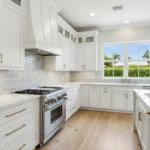
Does hurricane-ready design look different? No. Every storm-ready spec described in this guide — plywood cabinet boxes, impact windows, storm vent covers, quartz countertops, stainless hardware — is invisible or looks identical to the standard version. The storm-ready kitchen looks the same as any well-built Florida kitchen. You only notice the difference after a storm.
Build It Once. Build It Right.
If you’re already planning a kitchen remodel in Florida, the cost to add storm-ready design during the build is a fraction of what it costs to retrofit those same features after the walls close — and a smaller fraction still of what storm damage repair costs.
RenoVision works with Florida homeowners on kitchens built to perform year-round, not just on good weather days. Tell us what you’re planning and we’ll walk through the storm-ready options that fit your scope.